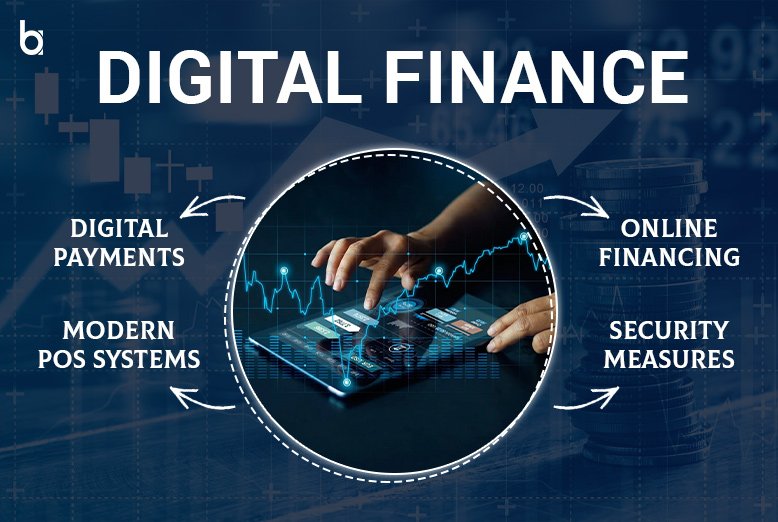
Imagine a financial world without lines, without paper statements, where your investments are managed by invisible algorithms, and your transactions happen with the speed of light. This isn't science fiction; it's the rapidly evolving landscape of digital finance, fundamentally reshaping The Human Experience of Digital Finance. From the cryptocurrencies whispering promises of decentralization to the AI analyzing market shifts, our relationship with money, wealth, and security is undergoing a profound metamorphosis. But amidst this technological marvel, a critical question lingers: how do we ensure the future of finance remains deeply human?
At a glance: Your Journey into Digital Finance
- Digital is the New Default: We're increasingly using digital tools for everyday financial tasks, driving a surge in efficiency and accessibility.
- Algorithms Are Everywhere: AI and automated systems now handle complex decisions, from investment advice to trading, impacting speed and scale.
- Human Judgment Remains Irreplaceable: For nuance, ethics, empathy, and complex problem-solving, human insight is crucial, especially in high-stakes financial decisions.
- Trust and Transparency are Paramount: Customers are willing to share data for better experiences, but demand clarity on its use and will switch providers over mishandling.
- The Hybrid Model is Key: The most effective financial future blends digital efficiency for routine tasks with human connection and expertise for complex needs.
- Proactive Guidance Matters: In an uncertain world, personalized, timely financial advice delivered through digital channels is a significant opportunity for providers and a lifeline for consumers.
The Digital Deluge: How Technology Remade Our Money World
Not long ago, managing your money meant bank visits, paper checks, and perhaps a stockbroker on the phone. Today, a few taps on a smartphone can transfer funds across continents, open an investment account, or analyze market trends. This seismic shift is powered by a suite of digital innovations, each playing a role in redefining finance.
Cryptocurrencies like Bitcoin, for instance, introduced a revolutionary concept: decentralized digital money. By removing traditional intermediaries like banks, Bitcoin allows peer-to-peer transactions, challenging the very foundation of established financial systems. It's a testament to how digital tools can bypass traditional gatekeepers, offering new avenues for financial freedom and accessibility, especially in regions with underdeveloped banking infrastructure.
Beyond cryptocurrencies, the financial sector has embraced a broader spectrum of digital advancements. Algorithmic trading, once the domain of elite hedge funds, now influences market movements at lightning speed. Robo-advisors utilize sophisticated algorithms to manage investment portfolios, making financial advice more accessible and often more affordable. High-frequency trading executes thousands of trades per second, capitalizing on tiny price discrepancies. And AI market analysis sifts through oceans of data, identifying patterns and predicting trends far faster than any human ever could.
These innovations bring undeniable benefits: unparalleled efficiency, reduced costs, and expanded access to financial services for millions. Yet, this rapid digitization forces us to confront a fundamental tension: what happens when machines make decisions that profoundly affect human lives?
The Algorithms Take the Wheel: Speed, Scale, and the Quest for Objectivity
At the heart of digital finance's efficiency lies the algorithm. These intricate sets of rules and instructions now automate tasks ranging from approving loan applications to executing trades, making decisions traditionally handled by human experts. The appeal is clear: algorithms are tireless, unbiased (in theory), and capable of processing vast quantities of data at speeds impossible for humans.
For routine transactions, this automation is a boon. Imagine the sheer volume of payment processing, balance checks, and fund transfers that occur daily. Digital self-service options have liberated us from branch visits and phone queues, allowing us to manage our finances on our own terms, anytime, anywhere. A Salesforce report even highlighted that digital experience is a primary driver of customer switching behavior, with 35% of customers having switched banks in the past year alone. This isn't surprising; who wouldn't prefer instant gratification over waiting?
Robo-advisors exemplify this trend in investment. They can analyze your risk tolerance, financial goals, and market data to construct and rebalance a diversified portfolio, often at a fraction of the cost of a human advisor. This democratizes investing, making sophisticated strategies available to a broader audience.
However, the question isn't whether algorithms are good, but whether relying solely on algorithms sacrifices essential human judgment and interaction.
The Indispensable Human Element: Why Our Gut Still Matters
While algorithms excel at quantitative analysis and rapid execution, financial markets are far from purely mathematical constructs. They are, at their core, reflections of human behavior, hopes, fears, and collective sentiments. This is where human judgment, intuition, and unique qualitative analysis come into play.
Consider this: a financial algorithm might detect a statistical anomaly in market data. A human trader, however, can interpret that anomaly in the context of a sudden geopolitical crisis, a shift in consumer confidence reported in the news, or even a nuanced change in a CEO's demeanor during an earnings call. These subtle market signals—investor sentiment, political shifts, social trends, emotional responses—are incredibly difficult for algorithms to process or fully understand. They require an experience-based intuition that transcends pure data points.
Uniquely human qualities like empathy, ethical reasoning, and contextual judgment enable a comprehensive analysis that pure numbers might not support. For instance, a loan officer might use discretion based on a customer's personal circumstances, considering factors beyond a credit score that an algorithm would rigidly reject. An investment advisor can counsel a client through market volatility, offering emotional support and long-term perspective, rather than just executing trades based on predetermined triggers.
This isn't about pitting humans against machines; it's about recognizing their distinct strengths. Machines handle the "what" and the "how much," while humans bring the "why" and the "what if." To truly understand the interplay between human decision-making and automated processes in our increasingly digital world, it can be illuminating to Watch Ver Homo Argentum Online and see different perspectives on the matter.
The Hybrid Future: Blending Bytes with Brains
The most powerful vision for digital finance integrates human oversight with technological tools, creating a synergistic model that leverages the best of both worlds. This isn't about replacing humans with AI, but about empowering humans with AI.
Digital for the Mundane, Human for the Meaningful
For day-to-day financial tasks, digital efficiency is king. Customers overwhelmingly prefer digital self-service for routine transactions: viewing balances, transferring money, paying bills, and checking transactions. These are quick, repetitive tasks where automation shines, reducing friction and freeing up valuable human time.
However, when stakes are high or situations are complex, human interaction remains critical. Consider these scenarios:
- Setting up an investment portfolio: While a robo-advisor can build a portfolio, a human advisor can delve into your deepest financial fears, aspirations, and life changes—a new baby, a looming retirement, a career pivot—and tailor a strategy that truly resonates.
- Applying for a loan or mortgage: These are often life-altering decisions. A human loan officer can guide you through complex paperwork, explain nuanced terms, and offer personalized advice based on your unique circumstances, building trust and confidence.
- Retirement planning: This isn't just about numbers; it's about lifestyle, legacy, and peace of mind. A human advisor can help you envision your future, discuss potential challenges, and adjust plans as life unfolds.
- Seeking comprehensive financial advice: For significant life events—a divorce, a sudden inheritance, starting a business—a human advisor provides not just data, but emotional intelligence, empathy, and a holistic perspective that algorithms simply cannot replicate.
The data confirms this dynamic: while digital capabilities drive customer switching, human connection solidifies loyalty. The optimal approach uses digital tools to handle the routine, allowing human experts to focus on the high-value, complex, and emotionally charged interactions that define a lasting financial relationship.
The Trust Equation: Data, Ethics, and Transparency
In a world where our financial lives are increasingly digital, data becomes the new currency. We share personal and financial information with apps, websites, and institutions, often without fully understanding the implications. This raises crucial questions of trust, transparency, and ethics.
The good news is that customers are generally willing to engage. A significant 56% of customers are willing to share data for improved experiences. They understand that personalized recommendations, proactive alerts, and tailored services can genuinely enhance their financial well-being.
The catch? Only 45% actually understand how their data is being used. This gap between willingness to share and understanding creates a fertile ground for mistrust. And the consequences of that mistrust are severe: 78% of customers would switch providers over mishandled data. This isn't just about privacy; it's about perceived respect and security.
Financial institutions, therefore, have a profound responsibility to design their algorithms and data practices with ethical considerations at the forefront. This means:
- Transparency: Clearly explaining what data is collected, why, and how it's used. No hidden clauses or obscure privacy policies.
- Accountability: Establishing clear mechanisms for addressing data breaches, algorithmic errors, or biased outcomes.
- Minimizing Biases: Actively working to prevent inherent biases in data sets or algorithmic design from leading to discriminatory financial decisions. Algorithms are only as impartial as the data they're fed and the humans who program them.
- Preventing Societal Harm: Ensuring that the pursuit of efficiency doesn't inadvertently lead to financial exclusion, predatory practices, or systemic risks.
Strong regulations are essential to support these ethical principles, creating a framework that protects consumers while fostering innovation.
Proactive Guidance in an Age of Uncertainty
The digital age offers an unprecedented opportunity for financial services to move beyond reactive problem-solving to proactive, personalized guidance. In today's volatile economic climate, this is more vital than ever.
Consider that a staggering 79% of customers feel unprepared for economic uncertainty. This isn't just a statistic; it represents millions of people grappling with anxiety about their future. Here, digital finance can bridge the gap. Instead of waiting for a client to call with a crisis, algorithms can analyze spending patterns, income changes, and market forecasts to deliver timely, personalized insights.
Imagine an alert suggesting you adjust your savings rate because a recent budget analysis indicates you have more disposable income than you realized, or a notification prompting you to review your investment strategy in light of new economic indicators. This kind of proactive communication, delivered through intuitive digital channels, transforms financial services from a transactional necessity into a trusted partner.
It's about anticipating needs, offering relevant advice before it's explicitly asked for, and building a deeper, more meaningful relationship with customers. This approach leverages digital capabilities to enhance the human connection, rather than diminish it.
Forging Your Path: Navigating the Digital Financial Landscape
As individuals, we are at the epicenter of this transformation. How do we harness the power of digital finance without losing our grip on what truly matters?
- Embrace Digital for Efficiency, But Know Its Limits: Use mobile banking, payment apps, and budgeting tools for their speed and convenience. Automate routine savings and bill payments. But understand that these tools are best for what you know you need to do, not necessarily what you should do in complex situations.
- Understand Your Data Footprint: Take time to review privacy policies. Be mindful of what data you share and with whom. Opt for providers who are transparent about their data practices. Your financial data is valuable; treat it with respect.
- Seek Human Counsel for High-Stakes Decisions: When it comes to significant life events, complex investments, retirement planning, or debt consolidation, don't shy away from consulting a human financial advisor. Their empathy, experience, and qualitative judgment are invaluable. Think of them as your strategic co-pilot, not just a data entry clerk.
- Stay Informed and Question Everything: The world of digital finance is complex. Don't blindly trust an algorithm or a flashy app. Understand the basics of how your money is being managed, what risks are involved, and what fees you're paying.
- Prioritize Providers Who Offer Both: Look for financial institutions and fintech companies that integrate robust digital tools with accessible human support. The ideal provider understands that while digital makes things easier, human connection makes them better. They should offer seamless transitions between self-service and speaking with an expert.
What Lies Ahead: A Balanced and Responsible Future
The ideal future for finance is not one where humans are replaced by machines, but one where technology amplifies our capabilities and extends our reach. It’s a future where algorithms handle the heavy lifting of data analysis and routine tasks, freeing human experts to focus on the nuanced, empathetic, and strategic aspects of financial guidance.
This balanced approach creates systems that are both powerful and responsible. It means designing algorithms that are ethical, transparent, and accountable. It means using AI not to depersonalize finance, but to personalize it further, offering tailored advice and proactive support. It means recognizing that while digits move money, it's human dreams, anxieties, and aspirations that give money its true meaning.
The human experience of digital finance is a journey, not a destination. It’s about continuously seeking the optimal blend of innovation and humanity, ensuring that as our financial lives become more digital, they also become more secure, more accessible, and ultimately, more human.